
Introduction
Peptide-based research compounds have revolutionized preclinical studies across wound healing, metabolic regulation, mitochondrial health, and tissue regeneration. For researchers seeking high-purity molecules, understanding the mechanisms, comparisons, and validated applications of each peptide is essential. This comprehensive guide covers 14 key research peptides—from BPC-157 to Tirzepatide—and provides critical information for buyers and laboratory scientists alike.
If you are looking to Buy BPC-157 Online UK, Buy Cagrilintide Online UK, or any of the other compounds discussed, always prioritize research-grade vials with third-party analytical certificates. Throughout this article, we reference PeptidesWellnessLab as a trusted source for these research materials.
Chapter 1: Wound Healing & Tissue Repair Peptides
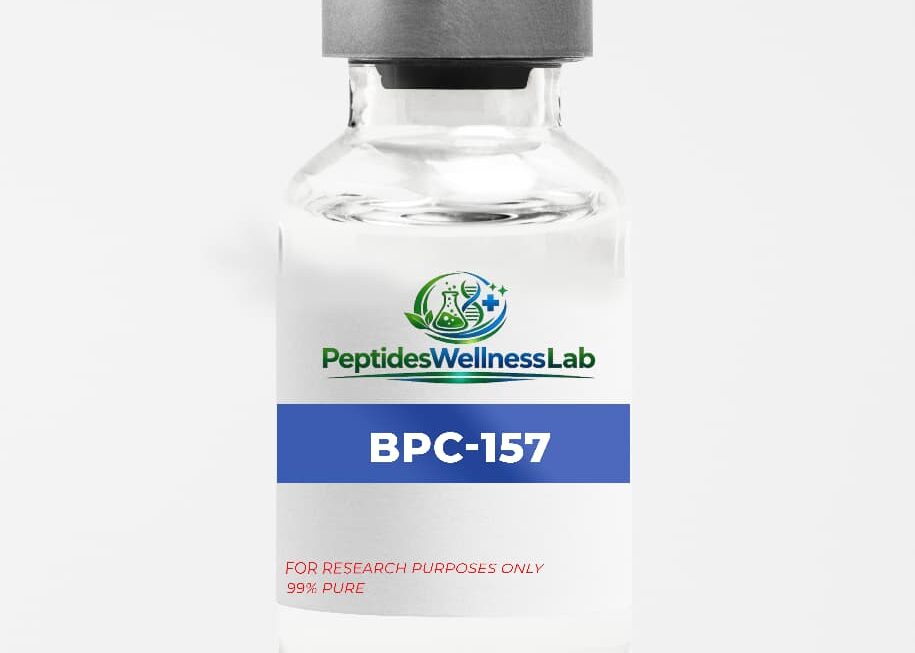
1.1 BPC-157 – Body Protection Compound
Mechanism of Action
BPC-157 is a synthetic pentadecapeptide derived from human gastric juice. In preclinical models, it promotes angiogenesis by upregulating vascular endothelial growth factor (VEGF) and endothelial nitric oxide synthase (eNOS). It also accelerates fibroblast migration and collagen deposition.
Key Research Applications
- Tendon-to-bone healing (Achilles and rotator cuff models)
- Inflammatory bowel disease (IBD) models – gut barrier restoration
- Corneal wound healing
- Muscle crush injury recovery
Preclinical Evidence
- Rat Achilles transection models showed 40–50% faster functional recovery (Staresinic et al., 2003)
- Mouse colitis models demonstrated reduced myeloperoxidase activity and macroscopic damage scores
For Buyers
When you Buy BPC-157 Online UK, ensure:
- Purity ≥99% by HPLC
- Lyophilized powder in sterile vials
- Residual solvent analysis available
1.2 TB-500 (Thymosin Beta-4)
Mechanism
TB-500 is a synthetic version of thymosin beta-4, which sequesters actin monomers (G-actin) to regulate cytoskeletal dynamics. It promotes cell migration, reduces inflammation via NF-κB inhibition, and supports cardiomyocyte survival.
Key Applications
- Cardiac ischemia-reperfusion injury models
- Corneal epithelial wound healing
- Dermal wound closure (full-thickness excisional wounds)
- Hair follicle research (angiogenic phase extension)
Comparison with BPC-157
| Feature | BPC-157 | TB-500 |
|---|---|---|
| Primary target | Growth factor receptors | Actin binding |
| Half-life (preclinical) | ~30 minutes | ~2 hours |
| Best for | Tendon/ligament | Muscle/cardiac |
1.3 GHK-Cu (Copper Tripeptide)
Mechanism
GHK-Cu (glycyl-L-histidyl-L-lysine-copper) acts as a natural copper carrier, modulating metalloproteinases (MMPs), stimulating collagen synthesis, and reducing pro-inflammatory cytokines (IL-6, TNF-α).
Research Uses
- Skin remodeling (UV-damaged murine models)
- Wound contraction and re-epithelialization
- Anti-fibrotic studies (liver and lung)
- Neuroprotection in Alzheimer’s models (copper dysregulation)
Important Buyer Note
Copper peptide stability requires proper reconstitution (sterile bacteriostatic water) and storage at ≤ -20°C for long-term use.
1.4 KLOW Peptide Stack
What is KLOW?
KLOW is a research blend combining BPC-157, TB-500, and GHK-Cu in fixed ratios (typically 5:5:2 mg per vial). It is designed for multi-target tissue repair studies.
Applications
- Complex wound models (burn + infection)
- Osteoarthritis cartilage preservation (rabbit models)
- Synergistic anti-inflammatory screening
Precaution
Researchers should verify individual component purity before assuming stack efficacy. Blend homogeneity varies by manufacturer.
Chapter 2: Metabolic & Obesity Research Peptides
2.1 Semaglutide (GLP-1 Receptor Agonist)
Mechanism
Semaglutide selectively activates the glucagon-like peptide-1 (GLP-1) receptor, enhancing glucose-dependent insulin secretion, slowing gastric emptying, and reducing appetite via hypothalamic POMC neurons.
Preclinical Data Highlights
- Diet-induced obese (DIO) mice: 25% body weight reduction over 28 days
- Improved β-cell survival in streptozotocin-treated rat models
- Once-weekly subcutaneous dosing established pharmacokinetic proof-of-concept
For Research Buyers
When you Buy Semaglutide Online UK, request:
- Peptide mapping (mass spec)
- Endotoxin levels <1 EU/mg
2.2 Tirzepatide (GIP/GLP-1 Dual Agonist)
Mechanism
Tirzepatide is a unimolecular dual agonist at the glucose-dependent insulinotropic polypeptide (GIP) and GLP-1 receptors. GIP agonism adds direct adipose tissue effects, including improved lipid buffering.
Key Research Findings
- Superior to Semaglutide in DIO models: 30–35% weight loss vs. 20–25%
- Reduced hepatic steatosis (NAFLD mouse models)
- No significant bone mineral density loss (6-month primate study)
2.3 Retatrutide (Triple Agonist: GLP-1/GIP/Glucagon)
Mechanism
Retatrutide adds glucagon receptor (GCGR) agonism, which increases energy expenditure via hepatic glucose output and browning of white adipose tissue.
Preclinical Advantages
- Highest weight loss among all incretin-based peptides in DIO mice (~40%)
- Improved fasting lipolysis and ketogenesis
- Phase II-equivalent animal models show preserved lean mass
Buyer Guidance
Due to triple receptor activation, Retatrutide vials require careful reconstitution to avoid peptide aggregation. Always use fresh bacteriostatic water.
2.4 Cagrilintide (Amylin Analogue)
Mechanism
Cagrilintide is a long-acting amylin analogue acting at the calcitonin receptor family (AMY receptors). It induces satiety via the area postrema and delays gastric emptying independently of GLP-1.
Research Synergy
Combined with Semaglutide (CagriSema preclinical model):
- Additive weight loss (up to 45% in DIO rats)
- Reduced gastrointestinal side effects compared to high-dose GLP-1 alone
Chapter 3: Growth Hormone Secretagogues (GHS)
3.1 CJC-1295 (with/without DAC)
Mechanism
CJC-1295 is a synthetic GHRH analogue modified with a drug affinity complex (DAC) that extends half-life by binding to albumin. It stimulates pulsatile GH release via the GHRH receptor.
Versions
- CJC-1295 with DAC – half-life ~6–8 days (continuous GH elevation)
- CJC-1295 without DAC – half-life ~30 minutes (more physiological pulse)
Research Use
- Age-related GH decline models
- Bone density studies in ovariectomized rats
- Muscle regeneration after nerve injury
3.2 Ipamorelin
Mechanism
Ipamorelin is a selective ghrelin receptor (GHSR-1a) agonist with minimal effect on cortisol, prolactin, or acetylcholine. It releases GH in a dose-dependent manner without desensitization.
Comparison: Ipamorelin vs. CJC-1295
| Parameter | Ipamorelin | CJC-1295 |
|---|---|---|
| GH pulse duration | Short (2–3 hours) | Prolonged (days with DAC) |
| Appetite stimulation | Mild | None |
| Best research use | Circadian GH restoration | Chronic GH elevation |
Buyer Tip
Ipamorelin is often co-administered with CJC-1295 (no DAC) in preclinical studies to mimic youthful GH pulsatility.
3.3 Tesamorelin
Mechanism
Tesamorelin is a GHRH analogue (1-44) with a C-terminal lipophilic moiety to extend half-life. It selectively increases GH without affecting IGF-1 in a non-pulsatile manner.
Unique Research Niche
- HIV-associated lipodystrophy models
- Visceral adipose tissue (VAT) reduction in aged primates
- Cognitive function studies (hippocampal neurogenesis)
Chapter 4: Mitochondrial & Longevity Peptides
4.1 MOTS-C (Mitochondrial Open Reading Frame of the 12S rRNA-c)
Mechanism
MOTS-C is a mitochondrial-derived peptide (MDP) that acts as a hormone, entering the nucleus to regulate AMPK and the AICAR pathway. It improves insulin sensitivity independently of GLP-1.
Key Preclinical Data
- High-fat diet mice: normalized glucose tolerance within 10 days
- Increased NAD+ levels in skeletal muscle
- Mimics exercise effects in sedentary animal models
For Buyers
MOTS-C is less stable than secreted peptides. Store at -80°C for long-term experiments.
4.2 NAD+ (Nicotinamide Adenine Dinucleotide)
Mechanism
NAD+ is a coenzyme central to redox reactions, sirtuin activation, and PARP-dependent DNA repair. Exogenous NAD+ in research models bypasses rate-limiting biosynthesis steps.
Applications
- Aging research (senolytic potential in murine fibroblasts)
- Chemotherapy-induced neuropathy prevention
- Circadian rhythm restoration (via SIRT1 deacetylation)
Important Note
NAD+ is highly hydrophilic and requires fresh preparation. Lyophilized NAD+ vials should be reconstituted immediately before use.
Chapter 5: Pigmentation & Other Research Peptides
5.1 MT-2 (Melanotan II)
Mechanism
MT-2 is a cyclic lactam analogue of α-MSH, acting as a non-selective melanocortin receptor (MC1R, MC3R, MC4R) agonist. MC4R agonism reduces appetite; MC1R stimulates eumelanin production.
Research Uses
- UV-protection studies (melanin induction without sun exposure)
- Erectile function models (central melanocortin pathway)
- Appetite suppression (comparison with GLP-1 agents)
Buyer Caution
MT-2 can cross-react with off-target receptors. Use receptor-specific antagonists in control experiments.
Chapter 6: Comparative Tables for Researchers
Table 1: Peptide Classification by Primary Research Area
| Peptide | Primary Research Area | Receptor/Target |
|---|---|---|
| BPC-157 | Wound healing | VEGF, eNOS |
| TB-500 | Cytoskeletal remodeling | G-actin |
| GHK-Cu | Skin/extracellular matrix | Copper-dependent enzymes |
| KLOW | Multi-tissue repair | Blend |
| Semaglutide | Metabolic | GLP-1R |
| Tirzepatide | Metabolic | GLP-1R + GIPR |
| Retatrutide | Metabolic | GLP-1R + GIPR + GCGR |
| Cagrilintide | Metabolic | Amylin receptors |
| CJC-1295 | GH axis | GHRH receptor |
| Ipamorelin | GH axis | Ghrelin receptor (GHSR-1a) |
| Tesamorelin | GH axis | GHRH receptor (extended) |
| MOTS-C | Mitochondrial | AMPK/AICAR |
| NAD+ | Longevity | Sirtuins, PARP |
| MT-2 | Pigmentation/appetite | MC1R, MC4R |
Table 2: Reconstitution & Storage Guidelines (Research Grade)
| Peptide | Recommended Solvent | Storage (°C) | Stability after reconstitution |
|---|---|---|---|
| BPC-157 | Bacteriostatic water | -20 | 30 days |
| TB-500 | Sterile water | -20 | 14 days |
| GHK-Cu | Acetic acid (0.1%) | -80 | 7 days |
| Semaglutide | PBS (pH 7.4) | -20 | 28 days |
| Retatrutide | Bacteriostatic water | -80 | 14 days |
| MOTS-C | Tris buffer | -80 | 5 days |
| NAD+ | Sterile saline | -20 (lyophilized) | Use immediately |
Chapter 7: Buyer’s Guide – What to Look for When You Buy Research Peptides Online UK
7.1 Certificate of Analysis (COA)
Always request HPLC and mass spectrometry data. Minimum acceptable purity: 98% for most applications, 99% for cell culture.
7.2 Residual Solvents and Endotoxins
- Residual TFA (trifluoroacetic acid): <0.1%
- Endotoxin levels: <1 EU/mg for in vivo studies
- Moisture content: <5% (lyophilized)
7.3 Vial and Packaging
- Amber glass vials with butyl rubber stoppers
- Nitrogen-flushed to prevent oxidation
- Clearly labeled with peptide name, net mass, and lot number
7.4 Trusted Supplier
For all the products discussed above, PeptidesWellnessLab provides:
- Third-party tested batches
- Research-use-only documentation
- Discreet shipping for UK laboratories
Direct Product Links for Researchers
- Buy BPC-157 Online UK
- Buy Cagrilintide Online UK
- Buy CJC-1295 Online UK
- Buy GHK-Cu UK
- Buy Ipamorelin Online UK
- Buy KLOW Online UK
- Buy MOTS-C Online UK
- Buy MT-2 Online UK
- Buy NAD+ Online UK
- Buy Retatrutide Vials UK
- Buy Semaglutide Online UK
- Buy TB-500 Online UK
- Buy Tesamorelin Online UK
- Buy Tirzepatide Vials UK
Chapter 8: Future Directions in Peptide Research
8.1 Multi-Receptor Agonists
The success of Retatrutide (triple agonist) suggests next-generation peptides will target 4–5 receptors (e.g., adding glucagon and amylin).
8.2 Mitochondrial-Derived Peptides (MDPs)
MOTS-C is the first of many; humanin and SHLP2-6 are under preclinical investigation for metabolic and neurodegenerative diseases.
8.3 Peptide-Drug Conjugates (PDCs)
BPC-157 or GHK-Cu conjugated to anti-inflammatory drugs may improve targeted wound healing in chronic ulcer models.
8.4 AI-Optimized Peptide Sequences
Machine learning algorithms now predict stability and receptor selectivity, reducing failed preclinical candidates.
Conclusion
From BPC-157’s tendon repair to Retatrutide’s triple agonism, peptide science continues to expand the frontiers of preclinical research. Whether you study wound healing, metabolic syndrome, GH deficiency, or mitochondrial aging, understanding the distinct mechanisms and applications of each compound is critical.
For UK-based researchers seeking authenticated, high-purity vials, PeptidesWellnessLab offers a comprehensive catalog. Always verify COAs, follow reconstitution protocols, and use these compounds strictly for laboratory research.
Explore more research guides and lab protocols at MyEveryDailyBlogs.com.