
Introduction: The Frontier of Drug Discovery in GI, Metabolic, and Autoimmune Disorders
The landscape of gastroenterology, metabolic health, and autoimmunity is undergoing a seismic shift. For researchers and procurement specialists, understanding the bridge between preclinical mechanisms and clinical application is vital. Drugs like Mesalamine and Budesonide have long been the standard for inflammatory bowel conditions, while next-generation biologics like Stelara and metabolic modulators like Wegovy represent the cutting edge of therapeutic intervention.
At Peptides Wellness Lab, we understand that access to high-quality research compounds is the cornerstone of innovation. Whether you are investigating the topical anti-inflammatory effects of 5-ASAs or the GLP-1 receptor agonism driving weight loss research, sourcing matters.
This guide provides a preclinical deep dive into nine key molecules. We will explore their pharmacokinetics (PK), pharmacodynamics (PD), and safety profiles, helping you make informed procurement decisions for your next study.
Section 1: Anti-Inflammatory & IBD Research (Mesalamine, Budesonide, Stelara)
1. Mesalamine (5-ASA): The Topical Colonic Workhorse
Mesalamine (5-aminosalicylic acid) remains a first-line therapy for Ulcerative Colitis (UC). Unlike systemic anti-inflammatories, its genius lies in its topical action within the gut lumen.
Preclinical Mechanism of Action (MOA)
The mechanism is not fully elucidated but is primarily attributed to local epithelial effects. Research indicates Mesalamine acts as a peroxisome proliferator-activated receptor-gamma (PPAR-γ) agonist and inhibits NF-κB signaling . By blocking both the cyclooxygenase (COX) and lipoxygenase pathways, it reduces the production of pro-inflammatory eicosanoids like leukotriene B4 (LTB4) and prostaglandin E2 .
Pharmacokinetics & Toxicology
For researchers studying colitis models, it is critical to note that Mesalamine has low systemic bioavailability (approx. 10-30% absorption). It acts luminally and is excreted primarily in feces. Preclinical toxicology studies highlight the kidney as the major target organ for toxicity. In rat models, high doses (640 mg/kg/day) induced renal papillary necrosis, validating the need for renal monitoring in long-term studies .
Efficacy Data
In controlled trials, mesalamine reduced the overall Disease Activity Index (DAI) significantly compared to placebo (55% vs. 21% reduction). It is particularly effective for left-sided colonic inflammation .
Researcher’s Note: When sourcing for in vivo studies, ensure the formulation mimics the delayed-release properties to deliver the API to the distal ileum and colon.
Secure high-purity Mesalamine for your GI studies: Buy Mesalamine Online UK
2. Budesonide (Entocort EC): Targeted Glucocorticoid Therapy
Budesonide represents a significant advancement over traditional corticosteroids like prednisolone, offering a high first-pass metabolism that spares systemic side effects.
Preclinical MOA & Selectivity
Budesonide has a 15-fold higher affinity for the glucocorticoid receptor than prednisolone . It exerts potent local anti-inflammatory effects by inhibiting cytokine production (IL-1, TNF-α) and adhesion molecules. The Entocort EC formulation utilizes a pH-dependent coating to deliver the drug specifically to the ileum and ascending colon .
Metabolic Profile
The drug undergoes extensive (approx. 90%) first-pass metabolism in the liver via CYP3A4. This results in minimal systemic exposure, drastically reducing the risk of adrenal suppression and osteoporosis seen with systemic steroids .
Comparative Efficacy
Preclinical models and clinical reviews confirm that budesonide is superior to mesalamine for inducing remission in mild-to-moderate Crohn’s disease and equivalent to prednisolone, but with a significantly safer adverse effect profile .
Researcher’s Note: Ideal for studies on Crohn’s disease localized to the ileum. Does not prevent post-surgical relapse.
Acquire Entocort EC for advanced IBD models: Buy Entocort EC UK
3. Stelara (Ustekinumab): The IL-12 and IL-23 Biologic
Shifting from small molecules to biologics, Stelara is a human monoclonal antibody that targets the p40 subunit common to interleukin (IL)-12 and IL-23. These cytokines are pivotal in Th1 and Th17 mediated inflammatory responses, which are drivers of Crohn’s Disease and Psoriasis.
Preclinical Rationale
In animal models of colitis, blocking the p40 pathway disrupts the inflammatory cascade, reducing the migration of pathogenic T-cells into the gut mucosa. Unlike TNF-alpha inhibitors (like infliximab), Stelara offers a distinct mechanism for patients who have developed resistance to anti-TNF therapies.
Research Applications
Current research is expanding into the role of IL-23 in other autoimmune axes. For researchers, stability and cold-chain logistics are the primary challenges when handling this monoclonal antibody.
Researcher’s Note: Requires strict temperature control (-20°C or 2-8°C depending on formulation) to maintain protein integrity.
Source Stelara for your autoimmunity research: Buy Stelara Online UK
Section 2: Metabolic & Motility Research (Wegovy, Domperidone, Creon)
4. Wegovy (Semaglutide): The GLP-1 Metabolic Revolution
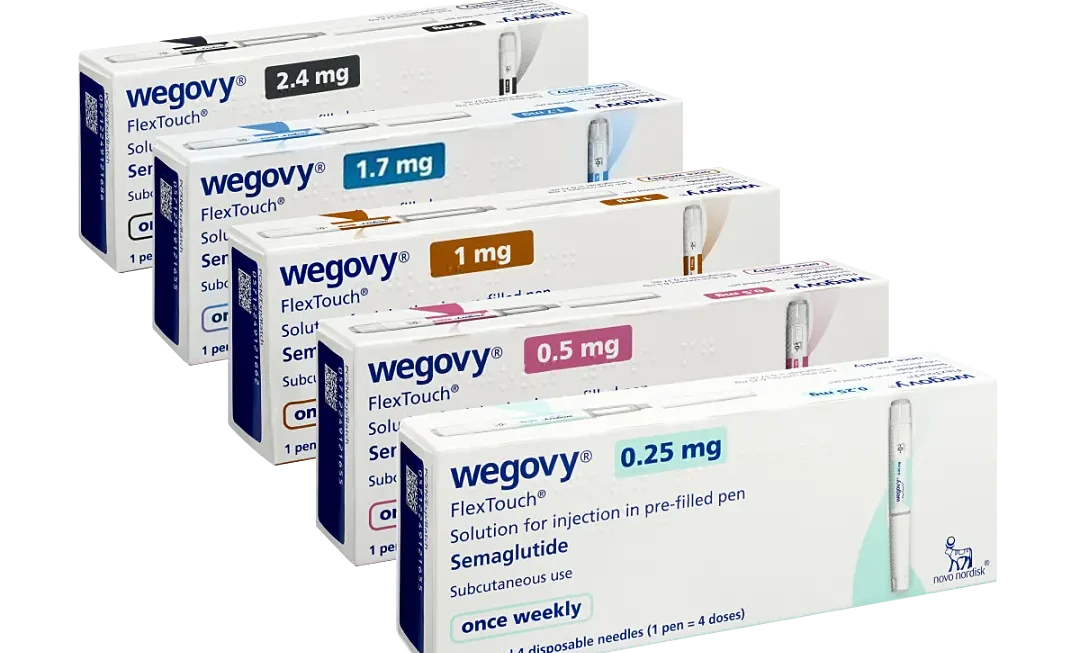
Wegovy (Semaglutide) has redefined metabolic research. As a GLP-1 receptor agonist (GLP-1 RA), it is currently approved for chronic weight management, but its preclinical applications are vast, including research into Non-Alcoholic Steatohepatitis (NASH) and cardiovascular outcomes.
Mechanism of Action
Semaglutide mimics the incretin hormone GLP-1. In preclinical models, it binds to GLP-1 receptors on pancreatic beta-cells to stimulate insulin secretion (glucose-dependent). However, for weight loss, the key action is central—specifically the activation of POMC neurons in the hypothalamus to reduce appetite—and peripheral—via delayed gastric emptying.
Structural Modification for Research
Wegovy is distinct due to a modification (substitution of lysine at position 26 with a fatty di-acid) that allows for albumin binding, extending its half-life to approximately 1 week. This makes it suitable for once-weekly dosing in long-term metabolic studies.
Safety Signal
Preclinical studies in rodents have shown a dose-dependent and treatment-duration-dependent increase in thyroid C-cell tumors (medullary thyroid carcinoma) at clinically relevant exposures. This is a critical safety parameter for long-term carcinogenicity studies .
Researcher’s Note: Ensure your source verifies the peptide purity (typically >99%) via HPLC, as impurities can skew metabolic data.
Order Wegovy for metabolic syndrome research: Buy Wegovy Online UK
5. Domperidone: The Peripheral Dopamine Antagonist
Domperidone is a potent anti-emetic and prokinetic agent used in gastroparesis research.
Preclinical Profile
Unlike metoclopramide, Domperidone acts exclusively as a peripheral dopamine D2 receptor antagonist. It does not readily cross the blood-brain barrier (BBB). This is its primary research advantage: it provides gastroprokinetic effects (enhancing antral and duodenal motility) without the central nervous system side effects (dystonia, parkinsonism) seen with other agents.
Cardiovascular Safety
The primary safety signal in preclinical cardiovascular models is the risk of QT prolongation due to hERG channel blockade. Researchers must monitor for arrhythmogenic potential in large animal models.
Researcher’s Note: Domperidone is banned in some jurisdictions for human use due to cardiac risks, but it remains a valuable tool in in vivo motility research.
Procure Domperidone for motility studies: Buy Domperidone UK
6. Creon (Pancrelipase): Enzyme Replacement Therapy
Creon is not a traditional drug but a mixture of pancreatic enzymes (lipases, proteases, amylases). In research, it is the gold standard for models of Exocrine Pancreatic Insufficiency (EPI) .
Mechanism of Action
The enteric-coated microspheres protect the enzymes from gastric acid degradation. They release active enzymes in the small intestine (pH >5.5) to digest fats, proteins, and carbohydrates. For researchers, the critical metric is Lipase activity (measured in USP units), as lipase deficiency drives steatorrhea.
Stability
Creon is notoriously sensitive to heat and moisture. Preclinical validation often requires verifying enzyme activity upon arrival, as improper shipping can denature the proteins.
Researcher’s Note: Do not crush or mix in alkaline foods (pH >7), as this destroys the enteric protection.
Secure Creon for pancreatic research models: Buy Great Creon
Section 3: Acid Reduction & Gut Microbiome (Dexilant, Nexium, Rifaximin)
7. Dexilant (Dexlansoprazole): The Dual Delayed-Release PPI
Dexilant is the R-enantiomer of lansoprazole. It is a Proton Pump Inhibitor (PPI) with a unique pharmacokinetic profile allowing for two separate releases of the drug.
Preclinical MOA
Dexlansoprazole irreversibly blocks the H+/K+ ATPase enzyme system (the proton pump) at the secretory surface of gastric parietal cells. This is the final step of acid secretion, inhibiting both basal and stimulated acid production regardless of the stimulus (acetylcholine, histamine, gastrin) .
The “Dual Delayed Release” (DDR) Advantage
Standard PPIs have a short plasma half-life. The DDR formulation provides an initial release for immediate acid suppression, followed by a second release hours later. In preclinical models, this extends the duration of intragastric pH >4, which is crucial for healing erosive esophagitis .
Drug Interactions
Dexilant is a potent inhibitor of CYP2C19. Researchers must account for this when co-administering other drugs metabolized by this pathway, such as diazepam or clopidogrel (where it reduces antiplatelet activity) .
Researcher’s Note: Dexilant is not recommended for pediatric studies under 2 years of age due to potential heart valve thickening observed in juvenile animal studies.
Order Dexilant for GERD research: Buy Dexilant Online UK
8. Nexium (Esomeprazole): The S-Isomer Precision
Nexium (Esomeprazole) is the S-isomer of omeprazole. The isolation of the single isomer provides more predictable metabolism than the racemic mixture.
Preclinical PK
Esomeprazole demonstrates higher systemic bioavailability (89% vs. 50% for omeprazole) and lower inter-individual variability. In animal models, this translates to more consistent acid suppression. Like all PPIs, chronic use in research models has been associated with enteric infections (due to bacterial overgrowth) and potential nutrient malabsorption (B12, Magnesium) .
Nexium vs. Dexilant
While both are PPIs, Dexilant’s DDR offers a longer duration of action, whereas Nexium offers very potent first-pass suppression. Your choice depends on the specific gastric pH requirements of your animal model.
Researcher’s Note: PPIs can interfere with the absorption of pH-dependent drugs (e.g., certain antiretrovirals and antifungals) in combination studies.
Procure Nexium for acid-suppression studies: Buy Nexium Online UK
9. Rifaximin (Xifaxan): The Non-Absorbed Antibiotic
Rifaximin is a semi-synthetic rifamycin derivative with a unique property for GI research: it is non-absorbable (<0.4%).
Mechanism & Microbiome Research
Rifaximin works by binding to the beta-subunit of bacterial DNA-dependent RNA polymerase, inhibiting RNA synthesis. Because it stays in the gut lumen, it achieves high fecal concentrations without systemic toxicity. It is used to research Hepatic Encephalopathy (reducing gut-derived ammonia) and Irritable Bowel Syndrome (IBS-D) (modulating the gut microbiome without the “collateral damage” of broad-spectrum antibiotics) .
Bacterial Resistance
While resistance is rare for short-term use, researchers must monitor for the emergence of resistant strains in long-term in vivo models.
Researcher’s Note: Rifaximin turns bodily fluids (urine/sweat) a reddish-orange color—this is a harmless but useful visual marker of absorption in animal models.
Source Rifaximin for microbiome research: Buy Xifaxan Online UK
Conclusion: Why Sourcing Quality Matters for Preclinical Outcomes
The efficacy of your research depends entirely on the integrity of the compounds you use. From the PPAR-gamma activation of Mesalamine to the GLP-1 agonism of Wegovy, each of these molecules has specific stability requirements and purity thresholds.
At Peptides Wellness Lab, we understand the rigorous demands of preclinical and clinical research. We offer a curated selection of these hard-to-find APIs and finished products, ensuring:
- High Purity (HPLC Verified): Essential for reproducible data.
- Correct Storage & Handling: Maintaining the integrity of biologics (Stelara) and sensitive enzymes (Creon).
- Global Shipping: Facilitating your research in the UK and beyond.
Explore our complete catalog for your next breakthrough: